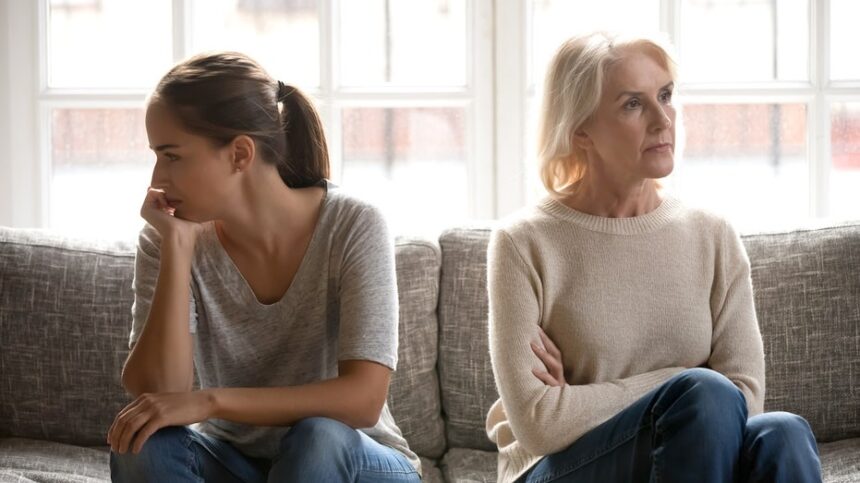
Cutting off is becoming more and more common, leading experts to consider the drivers of the division.
A 2025 YouGov survey found that 38% of U.S. adults are estranged from at least one family member, including siblings, parents, children or grandparents.
Based on his research and work in the field of family estrangement, Dr. Richard L. Blake, a British psychologist and author based in Austin, Texas, shared the following five factors that he believes commonly contribute to fractured family relationships.
A longstanding study of more than 2,000 mother-adult child relationships found that “value dissimilarity” was a strong predictor of estrangement, suggesting that differing beliefs may play a large role in family rifts.
“That could be political values, that could be gender ideology,” Blake told Fox News Digital.
“There were people more likely to cut off someone for having a different opinion than for people who have done serious violent crimes,” he said. “So certainly, political differences are a big problem.”
Heavy social media use has been linked to poorer parent-child relationships. A study of nearly 9,800 teens found that spending more than two hours a day on social media was linked to significantly greater odds of negative relationships with one or both parents.
Blake believes social media may also normalize family estrangement by exposing users to viral “no contact” stories and encouraging what he described as “word-of-mouth mimicry.”
“Someone might see a video on TikTok â ‘I cut off my parents, and I’m much happier now. They were toxic narcissistic boundary crossers. And now I’m great,'” he said. “And people mimic that. Or they think, ‘Oh, this person’s getting a lot of attention.'”
Although he acknowledged that there are no long-term studies that have definitively documented an increase, “that doesn’t mean absence of evidence isn’t evidence of absence.”
According to Blake, society has shifted away from what he described as a “dignity culture” toward one that places greater value on “victim culture.”
“So now it’s a race to the bottom,” he said. “If you don’t have enough victim status because of the way you were born, you can create a victim status by suggesting your parents abused you or neglected you ⦠and therefore you have value, a reason to cut them off.”
The expert also pointed to what he described as “therapy culture,” claiming that changing attitudes toward trauma and abuse have influenced how some people view relationships with their parents.
“Another justification is, I cut off my parents to protect my mental health â and this is a sort of false belief,” he told Fox News Digital. “There is this huge bias that if you’re struggling in your adult life, it must be because your parents did something they shouldn’t or didn’t do something.”
Blake argued that remain one of the strongest protective factors for mental health.
“Families are one of the most evidence-based buffers against mental illness,” he said. “Theres this myth that families are not important.”
The psychologist pointed to a well-known Minnesota study of adopted twins, which found that twins often resembled their biological parents more than the adoptive parents who raised them.
He also cited a 2024 study led by German sociologist Karsten Hank, which found that adults estranged from parents or siblings reported lower life satisfaction and more depressive symptoms than those who maintained family relationships.
“So it seems like it’s certainly a health event for parents who get cut off, and it’s probably a negative health event for the kids