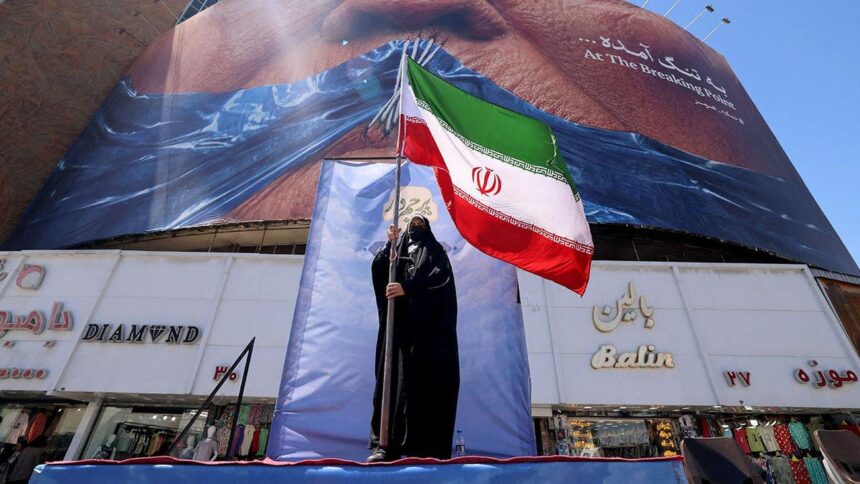
On Nov. 4, 1979, I was serving as duty officer at the headquarters of the 8th Infantry Division in Bad Kreuznach, . Late that day, a message arrived: Radical Iranian revolutionaries had stormed the U.S. Embassy in Tehran and seized dozens of Americans. My job was to carry that report to the division commander, Maj. Gen. William J. Livsey, and keep him informed as the situation developed.
No special orders came down. No one fully grasped that we were watching the birth of a geopolitical problem that would outlast the Cold War, consume seven American presidencies, and remain unsettled half a century later.
That seizure exposed something beyond a diplomatic humiliation: When the embassy fell, America did not even have a command responsible for the Persian Gulf. CENTCOM did not yet exist. The hostage crisis, followed weeks later by the Soviet invasion of Afghanistan, forced the realization. President Carter stood up the Rapid Deployment Joint Task Force in March 1980 â the organization that became todays CENTCOM in January 1983. The 1979 embassy seizure did not merely embarrass a superpower. It restructured how America organizes itself to fight in the Middle East.
Today, as Washington negotiates a tentative 60-day memorandum of understanding to , reopen the Strait of Hormuz, and establish a framework for nuclear talks, I keep returning to that November evening in Bad Kreuznach. The particulars have changed. The fundamental dynamic has not.
Washingtons current headlines focus on ceasefires, , Irans 440-kilogram stockpile of uranium enriched to 60% â a short technical step from weapons-grade â and competing memorandums of understanding. Those details matter. But they are not the central story.
The central story is one of strategic patience. For 47 years, every American administration has tried some combination of deterrence, diplomacy, sanctions, covert operations, and Irans behavior. Seven presidents pursued different approaches and produced different results. The regime has outlasted all of them.
The clerical government survived the Iran-Iraq War, crippling economic pressure, domestic uprisings, cyberattacks against its nuclear infrastructure, targeted assassinations of senior commanders, Operation Midnight Hammer, and now Operation Epic Fury. Through all of it, the objective in Tehran never shifted.
They mean to survive.
That may sound unimpressive. It is not. Survival is not a byproduct of Irans strategy â it is the strategy. Understanding that distinction is what separates clear-eyed analysis from the wishful thinking that has distorted Washingtons Iran policy for five decades.
The reason Washington keeps misreading Tehran is not a lack of intelligence. It is a failure of imagination. Americans instinctively view Iran as a conventional nation-state pursuing recognizable geopolitical interests. We assume that enough pressure or inducement will eventually persuade Tehran to behave like a normal member of the international community. That assumption has been wrong for 47 years.
Irans clerical rulers do not see themselves as managers of a nation-state. They see themselves as guardians of a revolutionary project launched in 1979 and divinely mandated to resist what they regard as permanent Western hostility. Sanctions relief is useful. Diplomatic legitimacy is welcome. But neither objective overrides the imperative to protect the regime itself.
In my book “Preparing for World War III,” I argued that Americas principal adversaries think in terms of decades rather than election cycles. They absorb setbacks and pursue long-term strategic positions. That observation applies to and Russia. It applies with equal force to Iran. In “Kings of the East,” I warned that authoritarian regimes possess a strategic patience that democracies struggle to match because their leaders are not constrained by election calendars or media cycles. Tehran has demonstrated both p