If your the second you walk out the door, leaving home can come with a little extra guilt. That can happen whether you live in an apartment or a house. A pet camera can show you what is happening, but watching from your phone does little when your dog reacts to every sound outside or gets anxious when you are gone.
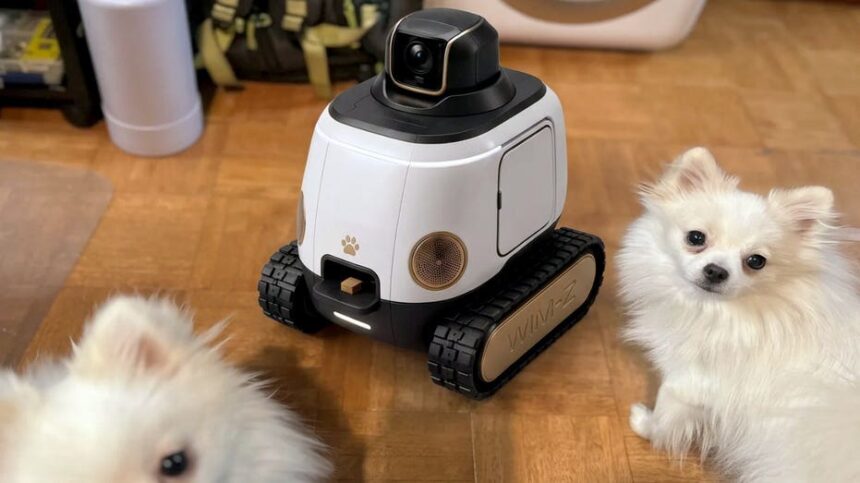
WIM-Z wants to take a more active role. The small tracked robot uses on-device to watch your dog and respond to certain behaviors. Once the robot is in position, it can identify your dog, detect barking and decide when to reward calmer behavior with a treat. You can also speak through the robot and drive it around your home from your phone.
AI ROBOT FOR SENIORS CAN ALERT FAMILY AFTER A CALL FOR HELP
Now WIM-Z has shared early field results, and its first customer units will make behavior and training decisions on their own while owners control where the robot moves.
NEW! 𩺠Free CyberGuy LIVE class: Get Better Healthcare With AI Saturday, September 26 at 11 a.m. ET / 8 a.m. PT
Kurt “CyberGuy” Knutsson will show you five practical ways AI can help you organize your health history, remember important appointment details, understand complicated medical information, research prescriptions and prepare smarter questions for your doctor. No technical experience is needed.
Save your free spot at CyberGuyLive.com
WIM-Z stands for Watchful Intelligent Mobile Zen. The robot measures about 11 inches tall and rides on rubber tank-style treads. Its camera turret can pan 270 degrees and tilt more than 120 degrees. A side cartridge holds up to 44 treats.
Inside, WIM-Z uses a Raspberry Pi 5 with a Hailo-8 AI accelerator. The company says its onboard AI can identify individual dogs, classify barking and track a dog with its pan-and-tilt camera.
Once WIM-Z detects barking, its behavior system can decide whether to intervene without waiting for you. The robot can then use a calming cue and dispense a treat when appropriate.
However, there is an important limit. WIM-Z does not currently drive itself around your home looking for your dog. You control that movement through the app, or you can leave the robot in one location.
WIM-Z also includes two-way audio. Its app can show behavior activity and optional highlight clips, giving you another way to see what happened while you were away.
WIM-Z recently released results from seven field trials conducted between May and September 2026. Six took place in homes around the New York metro area. One took place at a kennel in Jersey City. Across the trials, four logged 50 sessions and about 60 hours of use. WIM-Z says the system detected more than 2,100 barks. It also made 107 autonomous interventions and dispensed about 500 rewards.
The biggest numbers came from two homes that ran repeat autonomous sessions over two to three weeks. In one home, barking fell from 161 barks per hour to 40, a 75% reduction. In the other, barking fell from 317 barks per hour to 53, an 83% reduction. WIM-Z also reported that more interventions ended with the dogs going quiet as the trials progressed.
ROBOT DOG COULD DELIVER YOUR NEXT PACKAGE AND AN AD
WIM-Z takes a gentler approach. Instead of using shocks, sprays or scolding, it relies on treats and calm cues to reinforce better behavior. That lines up with guidance from the American Veterinary Society of Animal Behavior, which recommends reward-based training and warns against aversive methods.
The bigger question is whether the AI can read