

For most of American history, national defense has been understood geographically. There was American territory and foreign territory, borders to defend, military installations to protect and American forces stationed around the world. Even as warfare evolved, the basic concept remained relatively simple: the United States had physical assets that needed protection from foreign adversaries.
has fundamentally changed that calculation. Today, some of the most important assets supporting America’s economy, military and national security do not fit neatly within traditional definitions of territory or defense infrastructure. They are data centers, cloud-computing systems, telecommunications networks and other digital infrastructure that may be privately owned and located thousands of miles from the United States.
The border of the next war may not be a line on a map. It may be a data center.
OUR ENEMIES FOUND A WEAKNESS IN ESSENTIAL TECHNOLOGY. WE MUST FIX IT ⦠FAST
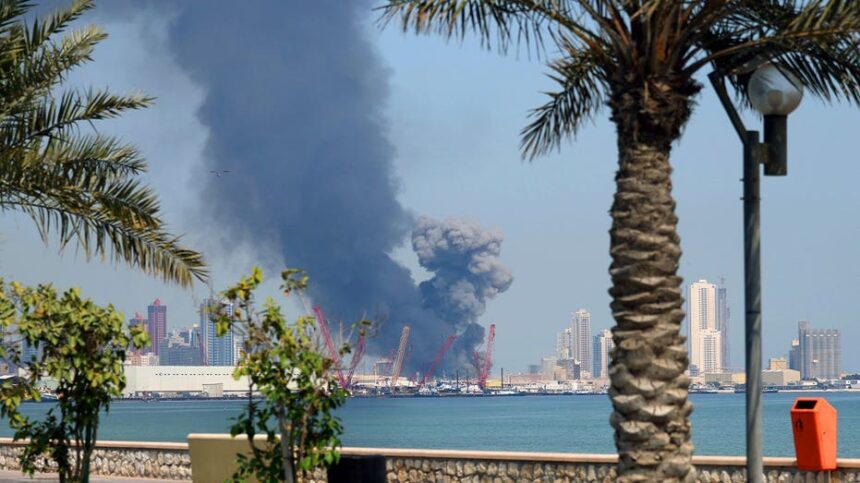
The recent conflict with Iran should force Washington to take that possibility seriously. In March, Iranian strikes damaged data centers and infrastructure in the United Arab Emirates and Bahrain, disrupting cloud infrastructure and creating problems with power and connectivity. Reuters reported that the damage contributed to service disruptions and an extended recovery process. Then, in April, Iran’s Islamic Revolutionary Guard Corps publicly claimed that it had targeted an Amazon cloud-computing facility in Bahrain.
That distinction is important. This was not simply a commercial facility caught in the crossfire. Iran publicly identified American commercial computing infrastructure as a target.
8 EVERYDAY THINGS THAT WOULD QUIT WORKING WITHOUT DATA CENTERS
That should be a warning for Washington. American power increasingly depends on infrastructure that is privately operated and, in some cases, located outside our borders. The military relies on commercial technology and cloud computing. Financial institutions depend on digital infrastructure to process transactions and maintain operations. Hospitals, communications networks, logistics companies and energy providers all depend on interconnected systems. Artificial intelligence, which is becoming important to both the American economy and national defense, requires enormous amounts of computing capacity and data.
The building may be privately owned, but the consequences of destroying it may extend far beyond the company that operates it.
AN AI CYBERATTACK COULD TURN OFF AMERICA’S LIGHTS BEFORE WASHINGTON EVEN UNDERSTANDS WHY
The federal government already recognizes that infrastructure can have national-security implications even when it is not owned by the government. Federal law defines critical infrastructure broadly, including physical or virtual systems and assets whose incapacity or destruction could have a debilitating impact on national security, national economic security, public health or safety.
But our national-security strategy has not fully caught up with the technological transformation of the American economy and military. A generation ago, it was relatively easy to understand why a power plant or port could be considered strategically important. Today, the same logic increasingly applies to the infrastructure that makes the digital economy possible. A data center supporting military logistics, financial markets, telecommunications or advanced artificial i


