s Parliament voted Friday to enshrine male-only succession for the imperial throne, part of a monarchy that traces its origins back roughly 1,500 years.
Lawmakers did so by revising an Imperial House Law dating back to the 1800s, despite warnings from experts that limiting succession to men in the paternal line will hasten the decline of Japans shrinking and aging imperial family, according to the Associated Press.
To address the dwindling number of eligible heirs, the revisions allow distant male relatives to be adopted into the imperial family to father future successors. However, strict rules remain in place limiting the throne to men with royal blood. The changes also allow princesses to retain their royal status after marrying commoners.
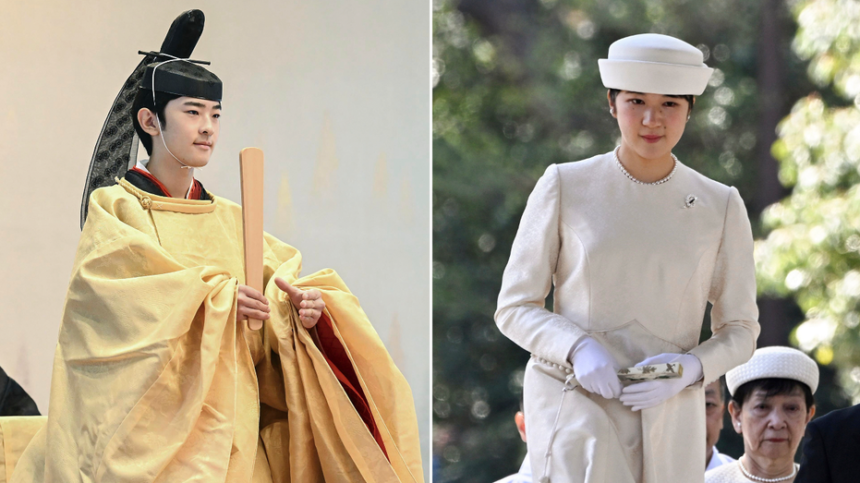
The new rules passed by Parliament come as many Japanese had been calling for Princess Aiko, Emperor Naruhitos 24-year-old daughter, to be allowed to succeed him â now an impossibility.
“The emperor is a symbolic figure, and I dont see why women cannot serve in the role,” Junichiro Tsujimaru, a 78-year-old sushi chain founder, told the AP.
Under current law, the 66-year-old emperor’s younger brother is next in line. After that, his 19-year-old nephew, Prince Hisahito, will inherit the throne, and then the emperor’s 90-year-old uncle.
Hisahito is the only boy to be born in four decades, and only five of the 16 adults in the are men.
Prime Minister Sanae Takaichi and other conservatives say the male bloodline is the source of the emperor’s authority and legitimacy.
“Its a declaration to prevent female monarchs ⦠and to defend the male-lineage at all costs,” Hideya Kawanishi, a Nagoya University expert on monarchy, told the AP. “They cannot say its male chauvinism, so they call it tradition.”
Chizuko Ueno, a prominent feminist and sociologist, recently suggested it was ironic that was the one to ensure male-only succession.
Ueno said the new rules “treat male royals as stallions and put female royals under pressure as childbearing machines to produce male offspring.”
Japan has had eight empresses descended from the male line in its centuries-long history as a hereditary monarchy. The last woman to reign was Empress Go-Sakuramachi, who sat on the throne from 1762 until 1771, when she abdicated in favor of her nephew.
Female eligibility for the throne was first eliminated in 1890 under the original Imperial House Law.
That change was carried over into the modern Imperial House Law, enacted in 1947, the same year Japans new constitution stripped the emperor of governing authority after the countrys defeat in .
Like Britains , Japans imperial family remains an important national symbol.
The Associated Press contributed to this report.