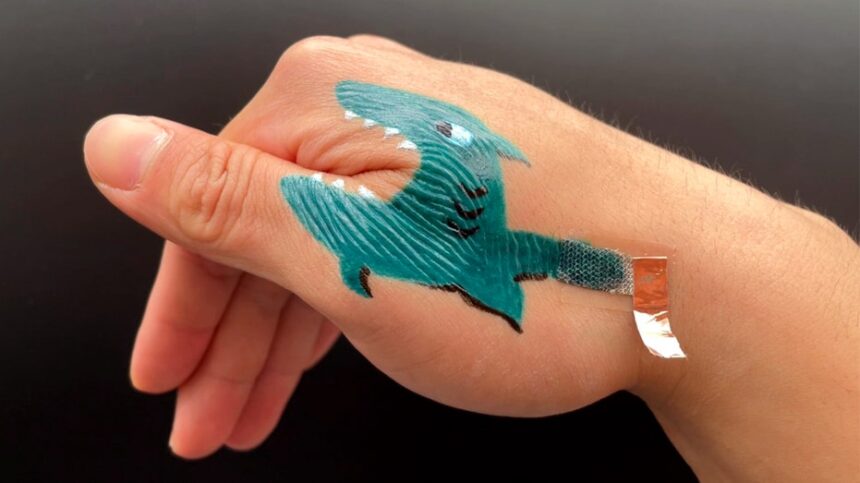
A colorful shark painted on your hand might look like a temporary tattoo. However, the design could also monitor the electrical activity of your heart. Penn State engineers have developed a paint-on electronic tattoo made from conductive ink. Researchers apply the ink directly to the skin, where it dries into a working electrode.
The team can add food dye to create almost any color or design. Therefore, a medical sensor could look more like face paint than a clinical patch. Penn State has filed a provisional patent for the technology. The researchers published their findings earlier this month, in the Proceedings of the National Academy of Sciences.
Free live CyberGuy class: Sick of Spam? Join us July 22
Join us this Wednesday, July 22, at 1 PM ET for a free CyberGuy Live class that will help you cut down on robocalls, spam texts, junk email and other unwanted messages. Kurt “CyberGuy” Knutsson will walk you step by step through simple ways to filter spam, clean up your inbox and recognize the messages that could put your personal information at risk. No technical experience is needed. Youll also receive our spam-stopping checklist, and every registrant will get a link to the class recording afterward.
Reserve your free spot today at CyberGuyLive.com.
Researchers created the ink by mixing several polymers and acidic additives into a water-based solution. The wet material has a glue-like consistency. Once painted onto the body, it dries in less than 10 minutes. A hair dryer can shorten the drying time.
After it dries, the ink becomes an electrode that collects electrical signals from the body. Because researchers paint it directly onto the skin, the ink follows tiny ridges and uneven areas. That close contact can produce more reliable measurements.
Many traditional electrodes use rigid metal-based materials. Those materials provide stability, but they can pull away from the body during exercise or everyday movement. Some experimental sensors use hydrogel instead. The soft material absorbs water and stretches with the skin. However, hydrogel can dry out over time and lose its grip.
Prefabricated electrodes can also leave a small air gap after someone applies them. Hair or sweat may make that gap worse. As a result, the sensor may struggle to capture a clear signal. Painting the electrode in place helps it settle into the skin’s natural texture before it hardens.
The dried ink handles the skin contact. Meanwhile, a piece of porous silver textile connects the electrode to the rest of the system. Researchers paint part of the wet ink over the silver fabric. The liquid flows into the textile and hardens, forming a secure connection.
A clip then connects the fabric to a larger electronic module. The wearer keeps that module taped beneath their clothing. Finally, the module sends the collected signals to a computer through Bluetooth.
The porous textile allowed the electrode to stretch beyond 150% of its original size without breaking. Its open structure also gives hair and moisture space to pass through the material.
In one experiment, a co-author wore the painted electrodes during normal daily activities for 12 hours. The system successfully tracked the person’s ECG readings throughout the test. An ECG records the electrical activity of the heart. Doctors can use that information to examine heart rhythm and identify signs that may need further attention.
A separate co-author wore the electrodes during exercise. The material remained attached and continued recording accurate sign