Federal taxpayers helped build a â now electricity customers are on the hook to keep it running.
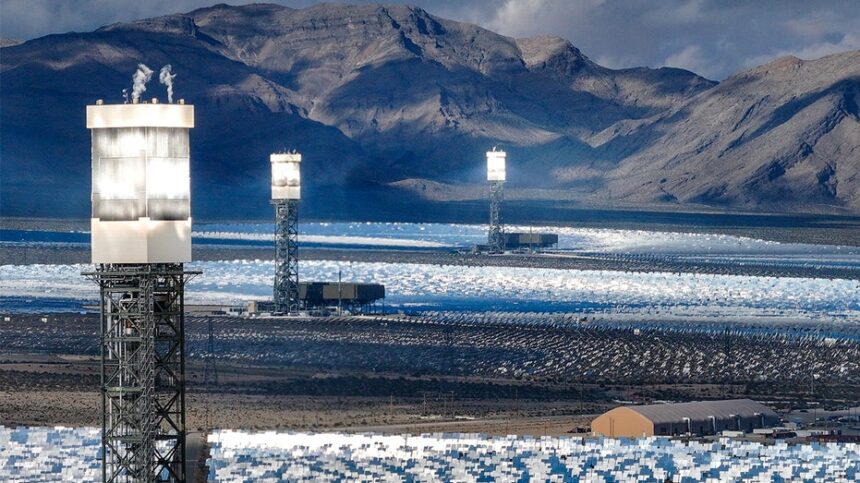
The Ivanpah Solar Power Plant, a sprawling facility near the border built with billions in federal support during the Obama-era economic stimulus program, is stuck in a costly dilemma.
Both the Trump and Biden administrations â along with the utility company that buys its power â have sought to shut it down, saying it underperforms, produces expensive electricity and has been overtaken by cheaper energy sources. But California regulators have refused to allow it to close, warning that closing the plant could strain the power grid.
The result is a costly standoff rooted in years of government decisions: shutting it down could leave taxpayers responsible for hundreds of millions of dollars tied to a $1.6 billion federal loan, while keeping it open means .
“This project makes no economic sense to keep afloat, and the market itself has shown that,” Daniel Turner, founder of the energy advocacy group Power The Future, told Fox News Digital.
“This is a boondoggle, like most of a boondoggle,” he said, arguing it is being kept alive for political reasons, with costs ultimately passed on to customers.
“At some point, you have to stop throwing good money after bad,” he added.
Rising out of the , the more than 4,000-acre facility still looks like the future. It has roughly 350,000 mirrors â mounted on more than 170,000 heliostats â which stretch for miles and reflect blinding sunlight into three towering structures that glow eerily white against the barren terrain.Â
But more than a decade after it opened, the technology behind it has been overtaken by cheaper, more efficient solar alternatives â turning what was once a symbol of progress into a costly problem. The project has also faced scrutiny over its , with thousands of birds killed after flying through the plants concentrated solar beams â along with the destruction of large areas of desert land and displacement of desert tortoises.
The costly tradeoff
Roughly $730 million to $780 million of the $1.6 billion federally backed loan tied to the project remains outstanding, according to federal data. In addition, the U.S. Department of the Treasury provided a $539 million grant to help build the facility, covering about 30% of construction costs.
At the same time, some analysts estimate the plants electricity could cost customers roughly $100 million more per year than power from newer solar alternatives.
That leaves policymakers facing a stark choice: shut it down and risk sticking taxpayers with hundreds of millions in losses tied to the loan, or keep it running and continue passing higher costs on to electricity customers.
Critics argue that without government backing and long-term contracts, the plant would likely struggle to remain economically viable.
Even the and the utility paying for the power have tried to walk away.
Officials under both the Trump and Biden administrations, along with Pacific Gas & Electric (PG&E) â which buys electricity from the plant â have supported shutting it down. PG&E has described the contracts as part of an effort to reduce “uneconomic resources” in its energy portfolio, according to regulatory filings.
.
The California Public Utilities Commission rejected efforts to terminate the plants contracts, citing concerns about grid reliability as , including increased demand from data centers.
In its decision, regulators warned that shutting down Ivanpah could strand more than $300 million in ratepayer-funded transmission and infrastructure tied to the project, while also creating potential risks for grid reliability â particularly as uncertainty grows around how quickly new energy projects can be built.
PG&E, meanwhile, has argued that terminating the contracts would save customers money compared with continuing to purchase electricity from