

Its late September. Kids are firmly back in school; routines are established and reading lists set. But what exactly is on the menu? The usual textbooks, which, if theyre in a government school, are often written by committee (with an agenda), range from uninspiring to outright woke.
Or maybe most of your childs school curriculum is delivered via lifeless and impersonal computer screens.
But there is an alternative, a source whose advocacy first transformed the task of educating children over one hundred years ago. Virtually unknown to public school parents, the British 19th-century reformer Charlotte Mason (1842-1923) has long been the hero of modern homeschooling in America, and the movements best-kept secret weapon.
WE GREW UP BEFORE SCREENS TOOK OVER. OUR KIDS DESERVE THAT CHANCE TOO
But her ideas and theories are not just applicable to the home-schooling community. Parents and educators can greatly benefit from Masons ideas about children and reading, which are even more relevant today.
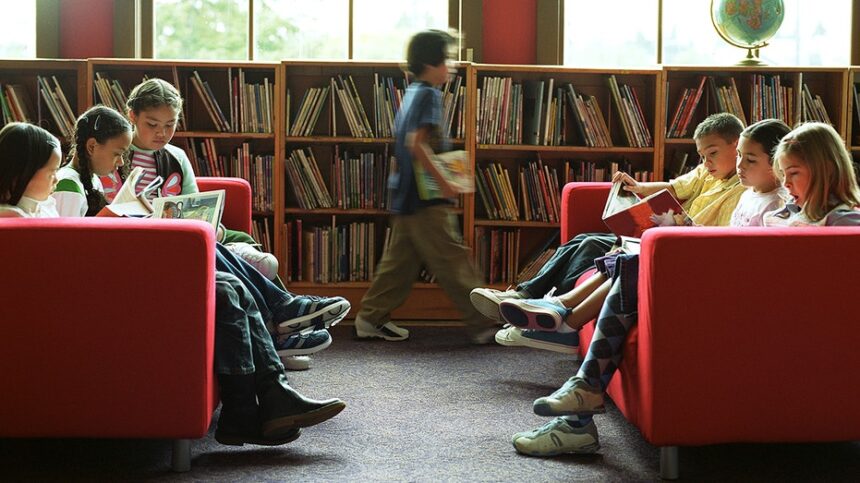
Creating a thirst for knowledge, and lifelong love of learning was Masons goal. If children developed an early hunger for ideas, she reasoned, it would sustain them through their lives. Mason believed that in addition to the proper vitamins and nutrients needed to thrive, children require ideas to chew on, to properly grow. And the source of these ideas, she reasoned, was not typical textbooks.
BEN CARSON, RILEY GAINES FIGHT SCRUBBING OF FAITH FROM KIDS’ US HISTORY BOOKS FOR AMERICA’S 250TH
Thats a perspective as true today as it was in Masons time. Most if not all textbooks which children encounter in public schools are either bland by design, so as not to arouse controversy, or the opposite: brazenly geared to advance a woke agenda.
Mason believed that the best resource for the ideas that will benefit children most came from a regular exposure to great art, great music, and, above all, books of “literary quality” or great books. “For the best thought the world possesses is stored in books,” she wrote in “Parents and Children.” “Children must have books, living books … the best is not too good for them; anything less than the best is not good enough.”
DOLLY PARTON’S BELOVED LITERACY MISSION SEES SURGE OF SUPPORT AFTER COUNTRY ICON’S DEATH
Her idea of “living books” was about books written by a single author (not a committee), ones that actively engage the mind, imagination and spirit, rather than simply presenting factual material.
For example, a list of “living books” for early learners (grades 1-4) might include: “The Trumpet of the Swan,” “Black Beauty,” and “A Little Princess.” Titles for middle schoolers include: “My Side of the Mountain,” “Around the World in 80 Days,” “To Kill a Mockingbird,” and C.S. Lewiss classic “Narnia” series.
CLASSICAL EDUCATION AND AI COULD RESHAPE HOW AMERICA PREPARES ITS CHILDREN
Hi


