A healthier version of the classic sausage roll could eventually become a reality as Scottish researchers develop a plant-based alternative to traditional pastry fats.
Scientists at Heriot-Watt University in Edinburgh, Scotland, recently reached a new milestone toward making a healthier sausage roll without sacrificing flaky pastry by moving their experiment from the lab to their food industry partner’s kitchen, the university announced in a news release.
“By taking innovative food science out of the lab into the kitchen and testing it with everyday consumers, it has the potential to make the nation’s healthier and make a genuine difference to our health and wellbeing,” said Stephen Euston, a professor working on the pastry research.
Sausage rolls are a British favorite that consist of seasoned sausage meat baked in puff pastry.
“Around 10-15 million sausage rolls are sold a week in the UK, and the bestselling version contains 11 to 12.4 grams of saturated fat,” Euston said. “That’s more than 60% of the recommended daily limit for adults.”
The scientists’ goal, Euston said, is to produce a pastry with the same flavor and texture people are used to, but with less saturated fat.
“We’re focused on sausage rolls, but this also applies to other that contain laminated pastry, such as croissants, Danish pastries and sweet or savory turnovers,” he said.
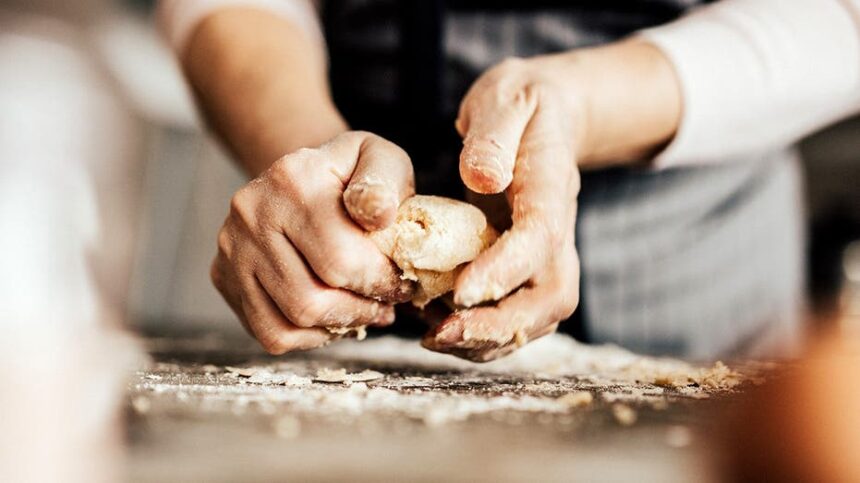
Making flaky pastry is a notoriously tricky process that typically involves butter or lard layered between sheets of dough.
“When the pastry bakes, steam forces those layers apart and gives you that flaky texture people expect,” Euston said. “Simply replacing the fat with a doesn’t work, because liquid oils lack the structure needed to separate the pastry layers.”
Plant-derived oils â such as sunflower and rapeseed â are normally liquid at room temperature. Euston and his team are using a process called oleogelation to make the plant-based oils mimic traditional solid fats while offering reduced saturated fat.
“We’re interested in oils from crops that can be grown sustainably in the U.K. in order to minimize the impact on the environment,” Euston said.
While the early findings are promising, Skaneateles, New York-based dietitian Kelly Springer told Fox News Digital it’s too soon to conclude whether the technology will ultimately produce a healthier food product.
“There is not quite enough research behind this product to either say if it’s good or better for you,” Springer, who was not involved in the research, said. “It seems promising; however, we would need to have more research to support the claims.”
The research comes as have become the focus of a heated political and nutritional debate in the United States.
Critics, notably followers of the movement, allege that consuming large quantities of refined seed oils, commonly found in highly processed foods, leads to increased inflammation and other health problems.
U.S. Health and Human Services Secretary has referred to seed oils as “poison” and advocates for replacing them with animal fats, such as beef tallow and butter.
Others argue there is limited scientific evidence to support MAHA’s claims about seed oils and say they are healthier because they contain less saturated fat.
“We are aware of the concerns on social media of the supposed health risks from consuming seed oil,” Euston told Fox News Digital. “We do not agree with these concerns and would refer you to the reports by highly respected, scientifically credible institutions such as the British Heart Foundation and Johns Hopkins University.”
The Heriot-Watt University researchers’