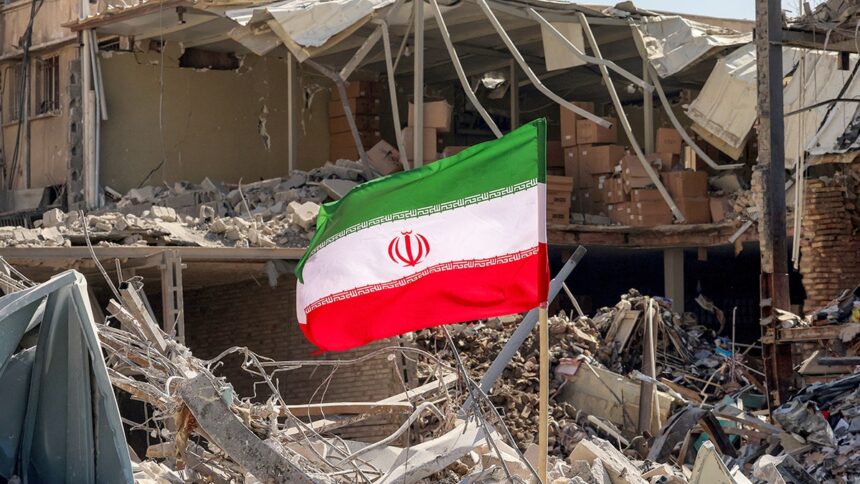
As the conflict with Iran continues, many elements of an ultimate deal have been explored. Issues such as nuclear weapons development, missile production, uranium divestiture and enrichment, foreign proxy financing, as well as activities in the region by Israel and Arab nations, have been scrutinized. In the meantime, it is well recognized that any deal with the is suspect; compliance has always been questionable, and efficient monitoring creates an even greater set of problems.
From the beginning, the notion of “regime change” has received much attention. For some, it means the termination of the Iranian Revolution of 1979. For others, it entails the complete elimination of all who have led and participated in the Iranian Revolution for decades. For others, it can be satisfied with a mere leadership change on the assumption, as with the US intervention in Venezuela, that new leaders may emerge who will lead the nation to greater cooperation with the US, turn away from fueling terror through proxies in other nations, and, because of an improved economy, be open to granting the general population greater individual freedoms.
One focus that has been completely absent from the public discussion concerns the and whether amendments, if not a full overhaul, should be on the table. Of course, a change in a document does not guarantee a meaningful change in behavior. Nonetheless, the failure to agree to specified amendments, if not a totally new framework, demonstrates that true change of the type much of the world would appreciate is unlikely.
The existing Constitution, formed in 1979 and subsequently amended in 1989, outlines a vision that is fully incompatible with Western principles and that has guided and given reason to all the regime has sought throughout its forty-seven-year existence. It also gives meaning to what has often been mistaken for mere hyperbolic cheerleading: “Death to America.”
While America was built on notions of liberty, individual freedoms, and limited government control, the Islamic Republic is based upon a global totalitarian vision. Essentially, it seeks a one-world Islamic government derived from Koranic principles and Sharia law. It sets out to help all similar revolutionary efforts across the world, justifying its support for its proxies and other activities abroad. In addition, it was hoped that this vision would be realized by the end of the 20th century, which certainly explains the unquenchable appetite for nuclear weapons as the optimum, most accelerated pathway toward overtaking all other forms of rule.
Here are just a few passages from the Preamble and the Articles themselves (italics added):
“The Constitution will strive with other Islamic and popular movements to prepare the way for the formation of a single world community (in accordance with the Koranic verse This your community is a single community, and I am your Lord, so worship Me [21:92]), and to assure the continuation of the struggle for the liberation of all deprived and oppressed peoples in the world.”
The Constitution was framed “with all the hope that this century will witness the establishment of a and the downfall of all others.”
The Army and the Islamic Revolutionary Guards “will be responsible not only for guarding and preserving the frontiers of the country, but also for fulfilling the ideological mission of jihad in Gods way, that is, extending the sovereignty of Gods law throughout the world⦔
“With due attention to the Islamic content of the Iranian Revolution, the Constitution provides the necessary basis for ensuring the continuation of the Revolution at home and abroad.”
“â¦framing the foreign policy of the country on the basis of Islamic criteria, fraternal commitment to all Muslims, and unsparing support for the freedom fighters of the world.”
The Constitution dictates not only activities within the territory; it is offensive as well as defensive. Aga