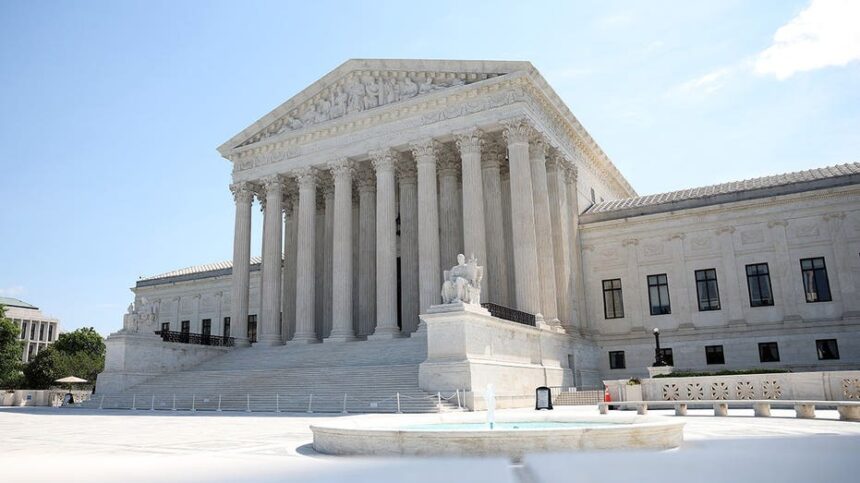
The Supreme Court begins its new term on Monday. The justices have filled only part of their docket, with more cert grants still to come. It is not too early to predict another good term for defenders of the Constitution, thanks to an originalist majority that takes its text and history seriously. Here are five cases to watch closely.
1. Climate lawfare: Suncor Energy v. Commissioners of Boulder County
The term opens with a case that could end one of the lefts most brazen lawfare campaignsâor drive prices at the pump even higher. Boulder, Colorado, is suing Suncor and ExxonMobil in state court under Colorado tort law, seeking gargantuan damages for the effects of global climate change. In other words, Boulder wants Colorado law to punish these companies for emissions in every state and around the world. Dozens of states and cities have filed similar suits. An outside counsel for Boulders legal team has publicly described such climate litigation as effectively imposing a “carbon tax” and acknowledged that it could raise fossil-fuel prices and potentially push energy companies toward bankruptcy.
SUPREME COURT KICKS OFF NEW TERM WITH FRESH QUESTIONS OVER ITS LEGITIMACY AND ITS FUTURE
Having failed to win their policy argument in Congress, activists are hoping they will have more success in friendly state courts.
The principal question for the justices is whether federal law bars these claims; the Court will also consider whether it has statutory and Article III jurisdiction to hear the case.
It does.
For more than a century, the Court has treated emissions that cross state lines as a federal issue. The Clean Air Act includes provisions that allow a state to regulate pollution sources within its borders, but sources outside them are a different matter, as the Court previously held in a case involving nearly identical Clean Water Act provisions.
Underneath all of this is a basic structural principle: The Constitution treats the states as equals, and none may govern beyond its own borders. A clear reversal would check every state or municipality that tries to set national policy in defiance of the structural Constitution.
2. There Colorado goes again: St. Mary Catholic Parish v. Roy
Colorado promised every family in the state free preschool at the school of its choice, public or private. Then it shut out Catholic preschools because they support Church teaching on sex and gender. In testimony highlighted by the Catholic schools, the programs director said hypothetically that a participating preschool could seek preferences for “gender-nonconforming children” or members of “the LGBTQ community,” provided the preference complied with the programs nondiscrimination requirements. That double standard is the antithesis of neutrality and a constitutional nonstarter. The Court has considered similar discriminatory systems in