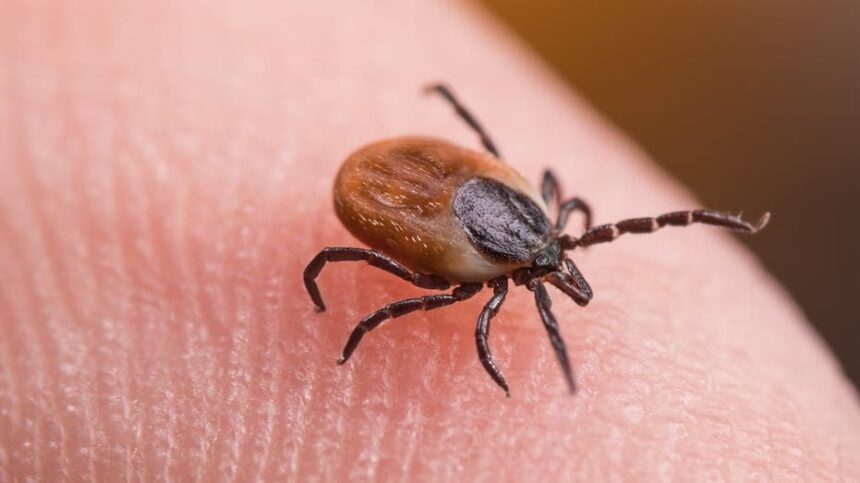
Tick bite-related ER visits are at their highest seasonal levels since 2017 across most U.S. regions, raising concerns about increased Lyme disease and other .
Thats according to recent data from the Centers for Disease Control and Preventions Tick Bite Tracker, which monitors weekly emergency department visits associated with tick bites across the country.
For every 100,000 ER visits, approximately 71 were related to tick bites in April 2026, compared to a historical seasonal average of roughly 30 per 100,000.
Some of the highest rates of tick-based ER visits were younger than 10 years and adults between 70 and 79 years.
“Over the past three decades, the geographic range of the has expanded significantly, and with it, the risk of Lyme disease and other Ixodes-transmitted infections,” Dr. Steven Goldberg, MD, a family medicine physician who practices urgent care and family medicine at UofLHealth in Louisville, Kentucky, told Fox News Digital.
“The Ohio River Valley region is one of the most striking examples â Lyme disease cases in Ohio have increased roughly 10-fold over the past decade, likely driven by the convergence of Northeastern and Upper Midwestern meeting in that corridor.”
States like Virginia and West Virginia, as well as areas south of the traditional endemic zone, are reporting increasing tick abundance and disease cases, the doctor noted.
“The lone star tick is also expanding its range northward beyond its traditional stronghold in the Southeast, which means diseases like ehrlichiosis and alpha-gal syndrome are appearing in regions where clinicians may not yet be thinking about them,” he warned.
Some studies predict that the blacklegged tick’s suitable habitat could expand by over 200% by the end of the century, Goldberg noted, including into Canada and across the central and southern U.S.
“Warmer, wetter conditions allow ticks to survive in habitats that previously would have been too cold,” Saggar said. “Milder winters also extend the lifespan of both ticks and the animals they feed on, accelerating tick reproduction and shortening their life cycles.”
Areas that historically experienced longer, colder winters or significant snow cover are now more hospitable to ticks, the doctor noted.
“As temperatures rise and precipitation patterns change, ticks are able to spread northward and thrive in new ecosystems,” he said.Â
Another contributing factor is increased and human expansion into wooded and grassy areas, as well as reforestation of formerly agricultural land.
“The recovery and expansion of white-tailed deer populations â critical hosts for adult blacklegged ticks â has been a major driver,” Goldberg added. “Deer density is positively associated with Lyme disease incidence. communities, particularly white-footed mice that serve as key reservoir hosts for Borrelia burgdorferi, also play a central role.”
Tick bites are known to transmit numerous illnesses, the most widespread of which is Lyme disease, a .
“Lyme disease cases alone have increased roughly two- to threefold over the past 20 years,” Saggar said. Approximately 476,000 Americans are diagnosed and treated for Lyme disease each year, per CDC surveillance data.
Also common are anaplasmosis and ehrlichiosis, two different types of , according to the doctor. Tick bites can also cause babesiosis, a malaria-like parasitic disease that infects and destroys red blood cells.
“Another growing concern is alpha-gal syndrome, a condition in which a (lone star) tick bite triggers a serious ,” Saggar said. “In rare cases, people have died from anaphylactic reactions linked to alpha-gal syndrome following a tick bite.”
Ticks can also transmit viruses, including the Powassan virus, which can cause severe neurologic injury.
” is arguably the most concerning emerging tick-borne infection,” said Goldberg, who is also chief medical officer at HealthT