

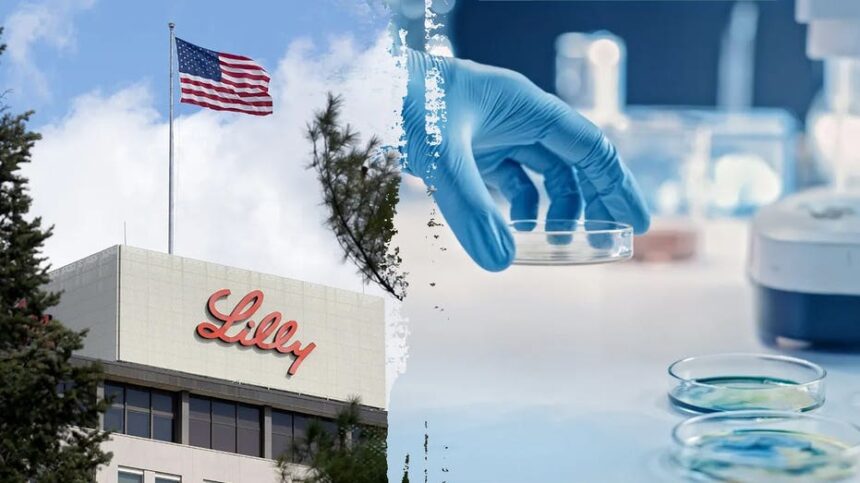
FIRST ON FOX: House Select Committee on the Chinese Communist Party Chairman John Moolenaar is launching an investigation into pharmaceutical giant Eli Lilly’s clinical trial operations in China, demanding records related to research conducted at Chinese military-affiliated hospitals and facilities in Xinjiang.
In a Tuesday letter obtained by Fox News Digital, Moolenaar, R-Mich., demanded that Eli Lilly provide detailed information about its clinical trial operations in China, including how the company ensures ethical standards, protects sensitive biotechnology and intellectual property, and veterans research conducted at hospitals linked to the People’s Liberation Army and in Xinjiang, where the Chinese government has been accused of widespread human rights abuses against Muslim Uyghurs and other ethnic minorities.
The committee says publicly available records indicate Lilly has sponsored or collaborated on more than 220 clinical studies in China since 2003, including at least 11 trials involving hospitals in Xinjiang, China, and at least 16 involving Chinese military medical centers. Several remain active today, the letter says.Â
The inquiry marks an escalation in congressional scrutiny of U.S. pharmaceutical companies’ growing ties to China as lawmakers warn that clinical research conducted at Chinese military-affiliated hospitals and in Xinjiang, China, could pose national security, intellectual property and human rights risks. The committee is seeking records from Lilly as it expands its investments and research partnerships in China.
Moolenaar stressed that the committee has “no evidence that Lilly has engaged in illegal activity or wrongdoing,” but argued that conducting clinical trials in China â particularly in Xinjiang, China, and at military-affiliated hospitals, hospitals affiliated with China’s People’s Liberation Army (PLA), which the committee argues could gain access to valuable biotechnology research and clinical trial data generated through collaborations with U.S. companies.
CHINAS GRIP ON RARE-EARTH MAGNETS COULD CRUSH US DRONE INDUSTRY BEFORE IT GROWS
“The United States is engaged in a fierce biotechnology competition with the People’s Republic of China,” Moolenaar wrote, arguing that biotechnology has become a strategic arena in U.S.-China competition with implications for national security, economic competitiveness and the protection of Americans’ medical data.
He pointed to China’s latest five-year plan, which identifies biotechnology as a national priority and calls for expanded use of artificial intelligence across the sector.
Moolenaar said China has transformed itself into one of the world’s fastest and least expensive places to conduct early-stage human drug trials through regulatory reforms, state subsidies and rapid patient enrollment. The committee argues that speed has made China increasingly attractive for global drug development while also raising concerns about ethics, data security and intellectual property.
GABBARD SAYS DECLASSIFIED BIOLAB RECORDS VALIDATE CONCERNS PREVIOUSLY DISMISSED AS MISINFORMATION
The inquiry comes as Lilly has continued expanding its presence in China.Â
Earlier in 2026, the company announced a roughly $3 billion investment to expand manufacturing and local supply in the count


