

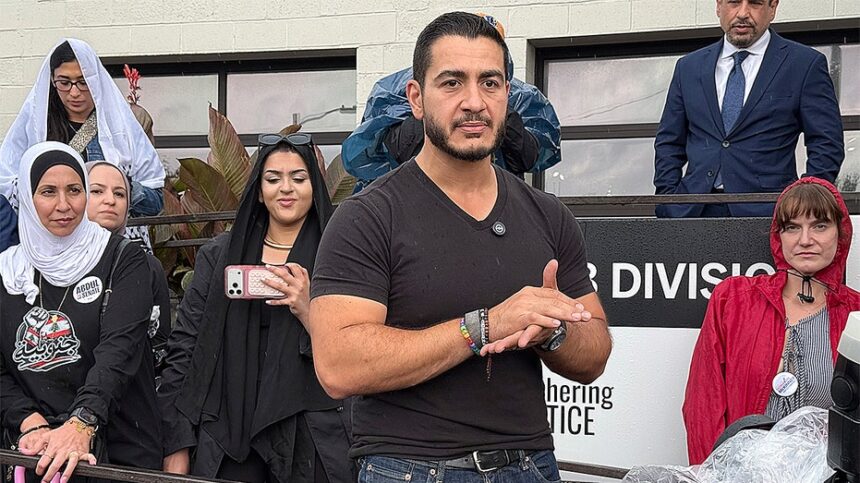
Michigan Democratic Senate nominee described Americans as “desperate to feel something” and lamented that “were just all living it alone here” while reflecting on the community he experienced during extended childhood stays in Egypt during a podcast episode last year â remarks uncovered after the candidate recently declared that he “hates” one of his home states most iconic destinations.
During a late-October 2025 podcast interview, after getting asked what Americans could gain from life “back home,” El-Sayed had a one-word answer: “Community.”
“I think the hardest part about American life right now is that weve been, like, deeply atomized,” El-Sayed said, arguing that the connections offered through phones and social media are “not community.” In Egypt and other societies with far more constant human interaction, he said, “youre constantly enveloped in other peoples humanity.”
“Its like a beautiful thing,” El-Sayed said. “And I wish we had more of that.”
The podcast remarks are not the first time El-Sayed has offered pointed criticism of American society and institutions.
During a 2019 University of Michigan School of Public Health commencement address, while discussing racial and economic disparities he said residents had been “directly and purposely marginalized by every level of government” in “a city and a state and a country that has baked racism into its foundation.” Later in the speech, while discussing the Flint water crisis and the country’s political climate, El-Sayed said he had watched American politics “revert to a strain of white supremacy and racism I never thought wed go back to.”
The comments stand in tension with the Michigan-centered image El-Sayed has presented at times, at one point describing himself as the quintessential “Michigan man.” In recently resurfaced recordings, however, he said he “hates” Mackinac Island, questioned elements of football culture by linking its ethos to historical narratives of slavery and oppression, and argued Americans should find another way to celebrate the Fourth of July in a video sharing four reasons “why fireworks suck.” In a 2021 Substack post El-Sayed also said “toxic masculinity” was “at the heart of America’s most popular sport.”
His campaign has pushed back on the resurfaced material, telling CNN that cherry-picked comments from old podcasts do not reflect his beliefs today and noting that El-Sayed played football and has publicly celebrated the Fourth of July.
During the October 2025 podcast interview, El-Sayed recounted how his parents would “ship me off to Egypt in the summers” so he would know his fathers language and culture, sometimes spending roughly four months with his extended family in the one-bedroom apartment where his father grew up.
He told the hosts those experiences taught him something about “the human condition” that he believes can be harder to encounter in American life.
“I think in American life sometimes were not so privy to the lives other people lead,” El-Sayed said, adding that in societies like Egypt, “the humanity of it all, like the carnal nature of it all, hits you.” He called the experience “euphoric” and said exposure to other people’s lives “softens or should soften your heart” to their experiences.
El-Sayed later pointed to weddings “back home” as a “ce


